Io, Europa, Ganymede, Callisto and the rest
A volcano world, an ice world with an ocean underneath, the biggest moon in the solar system and the most battered one. And dozens of little ones.
How many?
Jupiter has 115 moons officially recognised by the International Astronomical Union. NASA Science: Jupiter facts · checked 27 Oct 2026
Some NASA pages still give an older count of 95, including the NSSDC satellite fact sheet. NASA NSSDC: Jovian satellite fact sheet · checked 27 Oct 2026
Jupiter also has thousands of small objects in its orbit. NASA Science: Jupiter moons · checked 27 Oct 2026 Most of Jupiter’s moons are named after characters from mythology linked to Jupiter or his Greek counterpart, Zeus. NASA Science: Jupiter facts
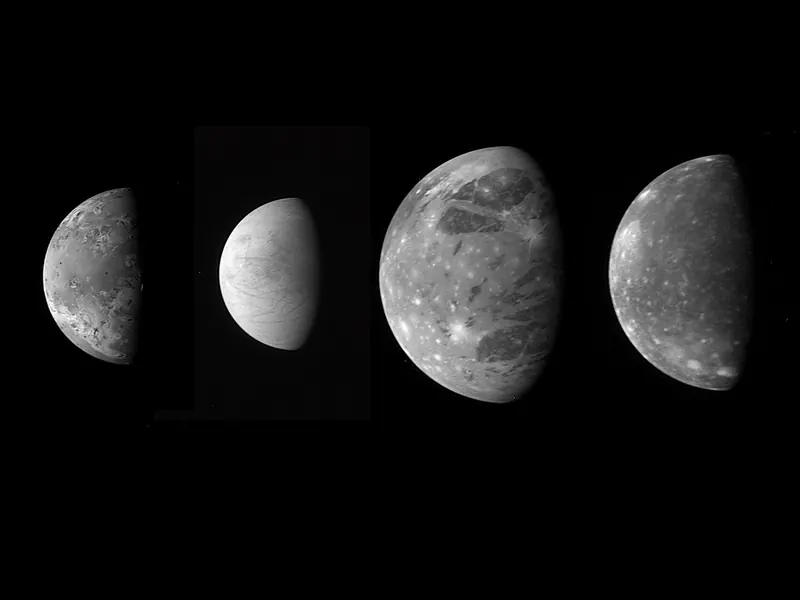
The four big ones
The four largest moons, Io, Europa, Ganymede and Callisto, were first seen by Galileo Galilei in 1610. They are called the Galilean satellites. NASA Science: Jupiter moons They were the first moons ever found going round a planet other than Earth. NASA Science: Io facts
Galileo called them the Medicean planets and numbered them I, II, III and IV. The names Io, Europa, Ganymede and Callisto were adopted in the mid-1800s. NASA Science: Io facts
With four large moons and many small ones, Jupiter is like a miniature solar system. NASA Science: Jupiter moons
Io: the volcano moon
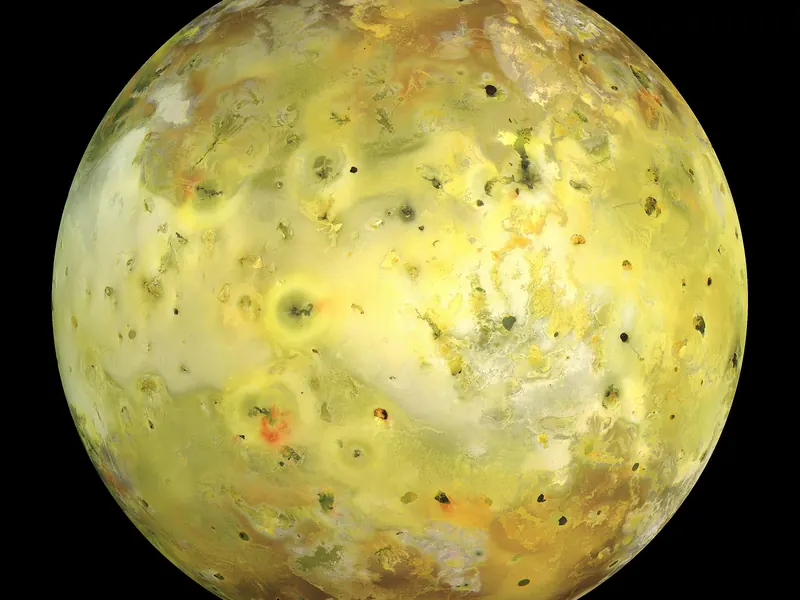
Io is the most volcanically active world in the solar system, with hundreds of volcanoes. Some throw lava fountains dozens of kilometres high. NASA Science: Io facts
Io’s volcanoes are powered by a tug-of-war between Jupiter’s gravity and precisely timed pulls from Europa and Ganymede. NASA Science: Io facts Tides make Io’s solid surface bulge up and down by as much as 100 metres. NASA Science: Io facts
Jupiter’s magnetic field strips about 1 tonne of material off Io every second. NASA Science: Io facts
In mythology, Io was a woman turned into a cow during a quarrel between Zeus (Jupiter) and his wife, Juno. NASA Science: Io facts NASA’s Juno mission is named after the goddess, who could see through clouds. The spacecraft peers through Jupiter’s clouds too. NASA Science: Io facts
Europa: an ocean under the ice
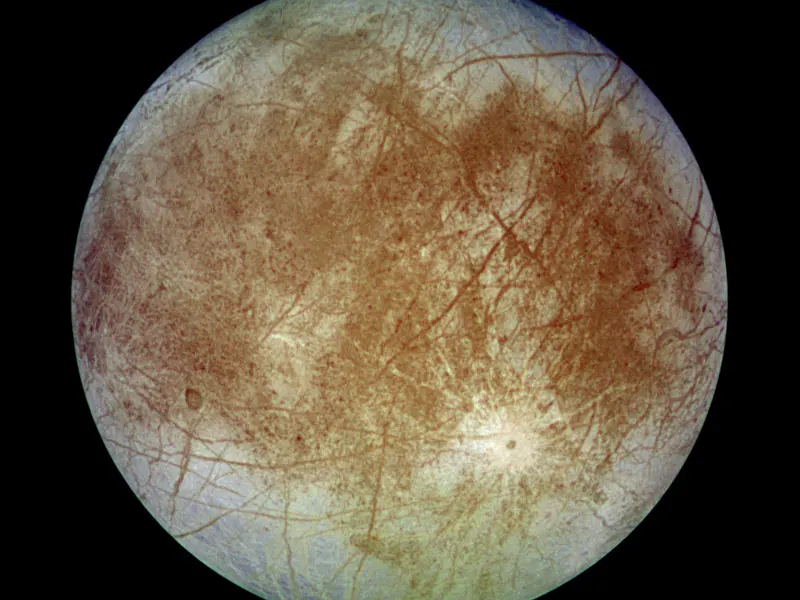
Europa probably has a saltwater ocean under its icy shell, holding twice as much water as Earth’s global ocean. NASA Science: Europa
Europa may be one of the most promising places in our solar system to find environments suitable for life beyond Earth. NASA Science: Europa
Europa is the fourth largest of Jupiter’s moons and the sixth-closest to the planet. NASA Science: Europa
Ganymede: the biggest moon
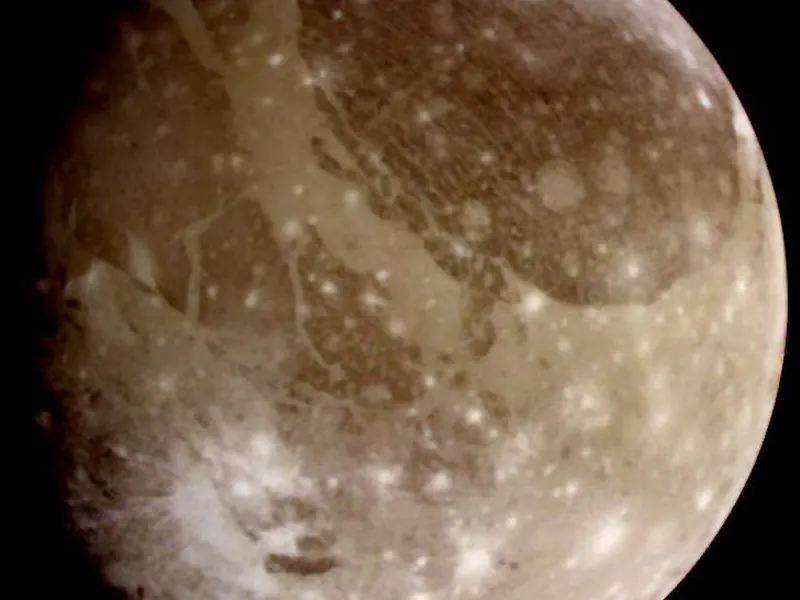
Ganymede is the largest moon in the solar system, bigger than the planet Mercury and the dwarf planet Pluto. NASA Science: Ganymede facts
Ganymede is the only moon known to have its own magnetic field, discovered by Galileo in 1996. It even has auroras. NASA Science: Ganymede facts
Ganymede may have an underground saltwater ocean with more water than all the water on Earth’s surface. NASA Science: Ganymede facts
In mythology, Ganymede was carried to Olympus by Zeus disguised as an eagle, and became cupbearer to the gods. NASA Science: Ganymede facts
Callisto: craters everywhere
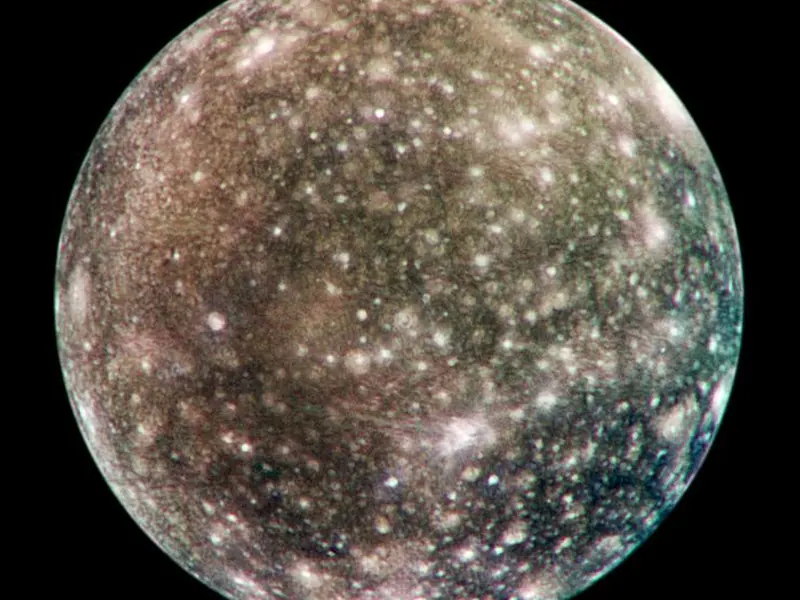
Callisto is the most heavily cratered object in our solar system. NASA Science: Ganymede facts Callisto is Jupiter’s second largest moon and the third largest moon in the solar system. NASA Science: Callisto facts
Galileo’s data suggest Callisto may hide a salty ocean, perhaps about 250 km below its surface, though it may not exist at all. NASA Science: Callisto facts
In Greek mythology, Callisto was a woman turned into a bear by Zeus. NASA Science: Callisto facts
In step
Io, Europa and Ganymede are in step: each time Ganymede goes round Jupiter once, Europa goes round twice and Io four times. NASA Science: Ganymede facts
All four Galilean moons are tidally locked: the same side always faces Jupiter. NASA Science: Ganymede facts
Io goes round Jupiter in 1.769 days, Europa in 3.551, Ganymede in 7.155 and Callisto in 16.689. NASA NSSDC: Jovian satellite fact sheet
Their radii: Io 1,821.5 km, Europa 1,560.8 km, Ganymede 2,631.2 km, Callisto 2,410.3 km. NASA NSSDC: Jovian satellite fact sheet
See the 1:2:4 rhythm for yourself: play Moon Transit Catcher →
Next: missions →