From Pioneer to Juice
Flybys first, then an orbiter that dropped a probe in, then Juno, then two new spacecraft on their way to the moons.
The first visitors
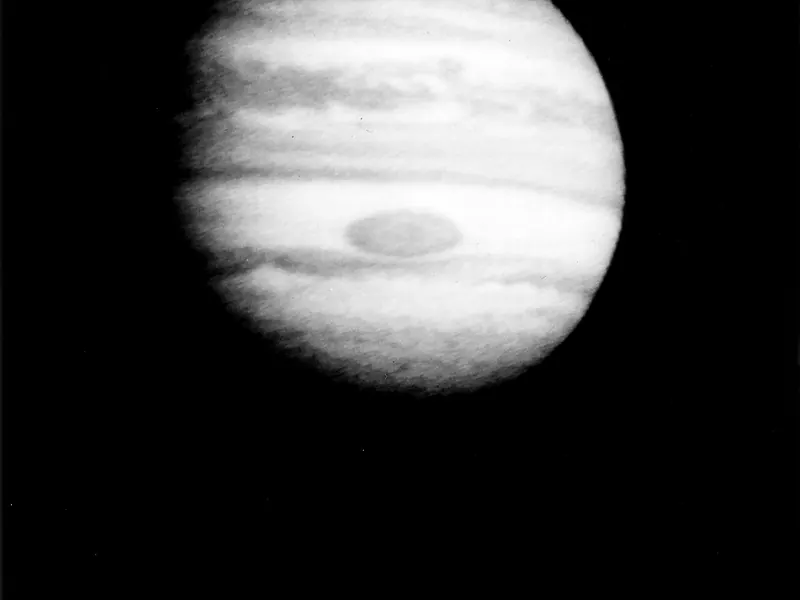
Pioneer 10, launched on 2 March 1972, was the first spacecraft to fly past Jupiter, making its closest approach on 4 December 1973. NASA Science: Pioneer 10
Its sibling, Pioneer 11, flew even closer to Jupiter in 1974 on its way to Saturn. NASA Science: Jupiter exploration
Voyager
Voyager 1 flew past in March 1979 and found a thin ring, two new moons and active volcanoes on Io. NASA Science: Jupiter exploration Voyager 1’s closest approach was on 5 March 1979, 280,000 km from Jupiter. NASA Science: Voyager 1
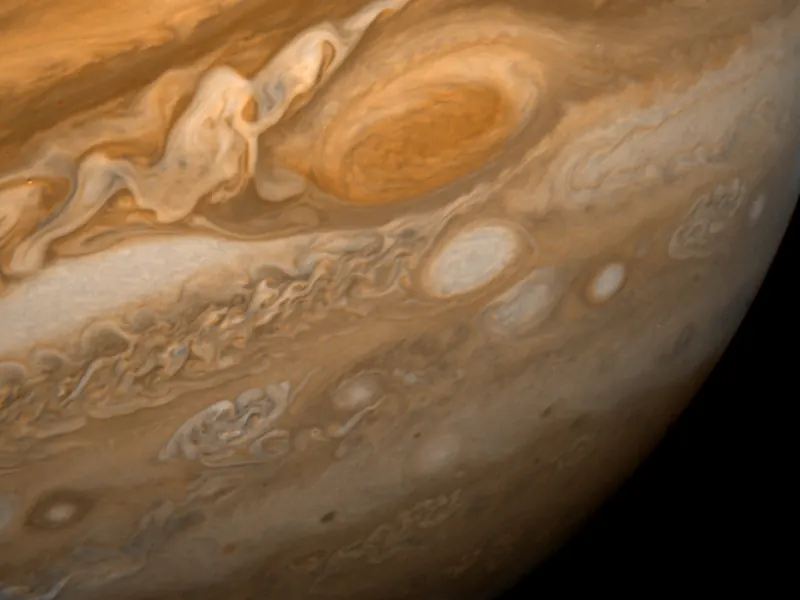
Galileo: the first orbiter
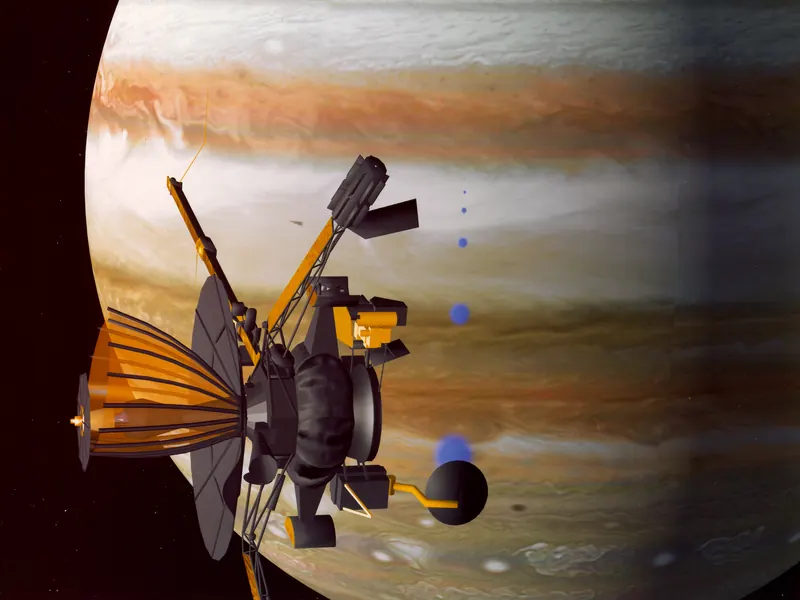
Galileo was the first spacecraft to orbit an outer planet. It arrived at Jupiter on 7 December 1995 and orbited 34 times. NASA Science: Galileo
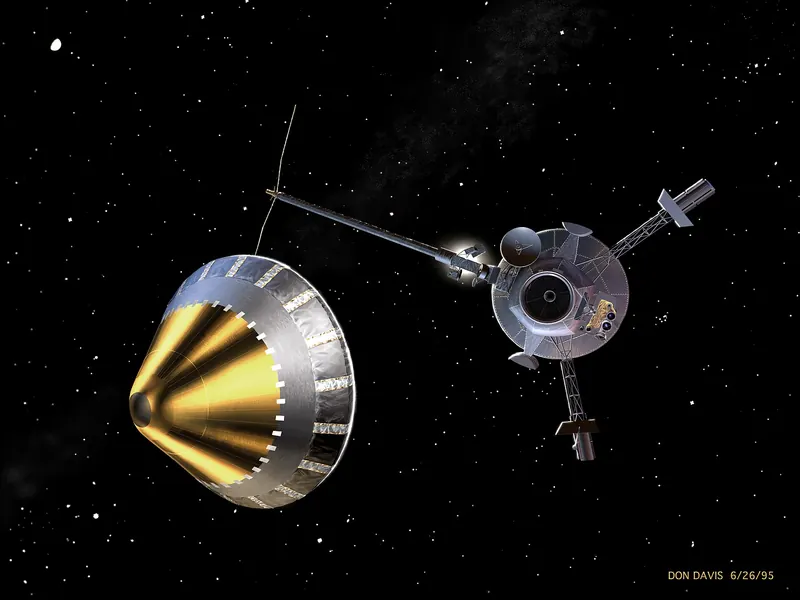
Galileo dropped a probe into Jupiter’s atmosphere: the first entry probe into an outer planet. NASA Science: Galileo
Galileo was deliberately sent into Jupiter on 21 September 2003, to protect a possible ocean on Europa. NASA Science: Galileo
Shoemaker-Levy 9
In July 1994, pieces of comet Shoemaker-Levy 9 smashed into Jupiter, from 16 to 22 July: the first time spacecraft watched two solar system bodies collide. NASA Science: Comet Shoemaker-Levy 9 When it was found in 1993, the comet was already torn into more than 20 pieces by Jupiter’s gravity. NASA Science: Comet Shoemaker-Levy 9
Cassini, on the way past
Cassini explored the Jupiter system for about six months, from October 2000 to March 2001, on its way to Saturn. NASA Science: Jupiter exploration
Juno
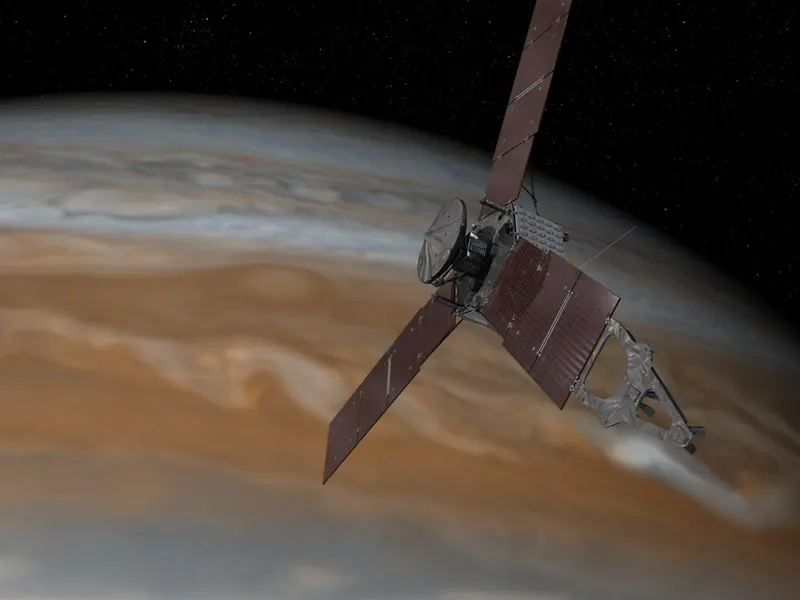
Juno launched on 5 August 2011 and entered orbit around Jupiter on 4 July 2016. NASA JPL: Juno Juno is the first solar-powered spacecraft to work at Jupiter. NASA Science: Juno
NASA’s Juno mission is named after the goddess, who could see through clouds. The spacecraft peers through Jupiter’s clouds too. NASA Science: Io facts
Juno found giant cyclones at Jupiter’s poles: eight in an octagon in the north and five in a pentagon in the south. NASA Science: Jupiter facts
Juno’s measurements suggest Jupiter’s core is larger than expected and not solid: scientists call it dilute, or “fuzzy”. NASA Science: Jupiter facts
In 2026, NASA reported that Juno’s data show Jupiter is about 8 km narrower at the equator and 24 km flatter at the poles than previously thought. NASA Science: Juno redefines the size and shape of Jupiter (2026)
Juno was still at work in 2026: on 1 May 2026 it photographed Thebe, one of Jupiter’s small inner moons. NASA Science: Juno stories · checked 27 Oct 2026
On their way: Europa Clipper and Juice
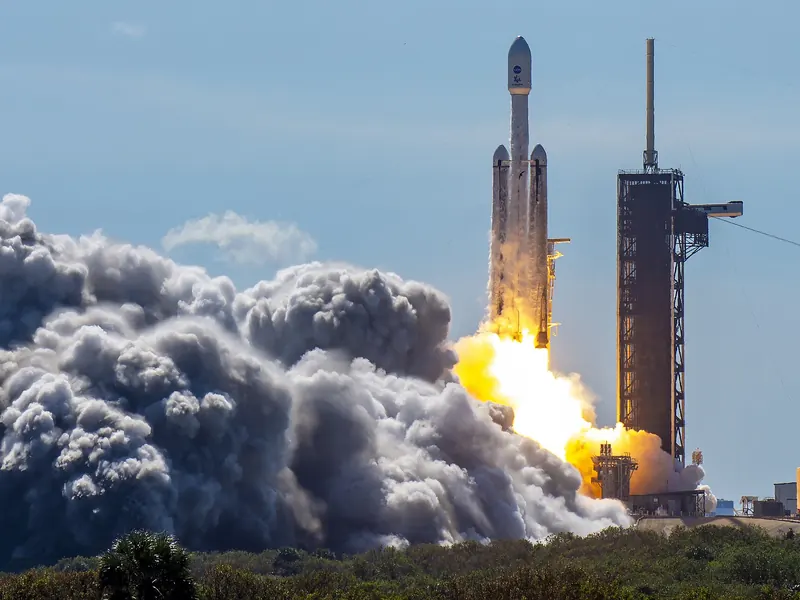
NASA’s Europa Clipper launched on 14 October 2024 and is due to reach Jupiter in April 2030. NASA Science: Europa Clipper · checked 27 Oct 2026 Europa Clipper is the first mission designed to make a detailed study of Europa. NASA Science: Europa Clipper
ESA’s Juice launched on 14 April 2023 and is due to reach Jupiter in July 2031, to study Ganymede, Europa and Callisto. ESA: Juice factsheet · checked 27 Oct 2026 Juice is planned to finish with an orbital tour of Ganymede. ESA: Juice factsheet
Timeline
- 1973 Pioneer 10, launched on 2 March 1972, was the first spacecraft to fly past Jupiter, making its closest approach on 4 December 1973. NASA Science: Pioneer 10
- 1974 Its sibling, Pioneer 11, flew even closer to Jupiter in 1974 on its way to Saturn. NASA Science: Jupiter exploration
- 1979 Voyager 1 flew past in March 1979 and found a thin ring, two new moons and active volcanoes on Io. NASA Science: Jupiter exploration
- 1979 Jupiter has rings, discovered by Voyager 1 in 1979. They are dark and faint, and hard to see unless the Sun is behind them. NASA Science: Jupiter facts
- 1994 In July 1994, pieces of comet Shoemaker-Levy 9 smashed into Jupiter, from 16 to 22 July: the first time spacecraft watched two solar system bodies collide. NASA Science: Comet Shoemaker-Levy 9
- 1995 Galileo was the first spacecraft to orbit an outer planet. It arrived at Jupiter on 7 December 1995 and orbited 34 times. NASA Science: Galileo
- 2000 Cassini explored the Jupiter system for about six months, from October 2000 to March 2001, on its way to Saturn. NASA Science: Jupiter exploration
- 2003 Galileo was deliberately sent into Jupiter on 21 September 2003, to protect a possible ocean on Europa. NASA Science: Galileo
- 2016 Juno launched on 5 August 2011 and entered orbit around Jupiter on 4 July 2016. NASA JPL: Juno
- 2023 ESA’s Juice launched on 14 April 2023 and is due to reach Jupiter in July 2031, to study Ganymede, Europa and Callisto. ESA: Juice factsheet · checked 27 Oct 2026
- 2024 NASA’s Europa Clipper launched on 14 October 2024 and is due to reach Jupiter in April 2030. NASA Science: Europa Clipper · checked 27 Oct 2026
- 2026 Juno was still at work in 2026: on 1 May 2026 it photographed Thebe, one of Jupiter’s small inner moons. NASA Science: Juno stories · checked 27 Oct 2026
Next: myths vs facts →